
This post is also available in:
 Français (French)
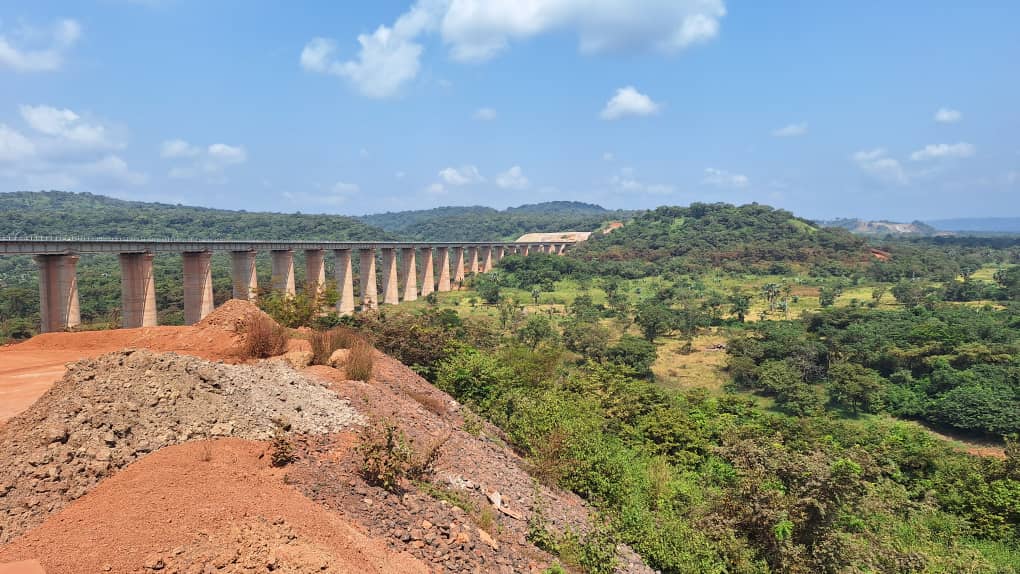
On March 6, 2026, in Conakry, the NGO Action Mines Guinée presented its annual report on the Simandou iron ore project — and the findings were stark. Across at least three affected areas, the same impacts documented in previous years persist: agricultural land polluted by construction activities, homes cracked by dynamite explosions, fishing livelihoods disrupted along the logistics corridor. Of 48 community complaints formally recorded, only 3 were resolved in a satisfactory way; 10 have been partially resolved or are in the process of being addressed. agricultural zones are affected, directly threatening food security and household incomes. The report also reveals that dust from mining activities and traffic is the cause of reported respiratory illnesses. These findings are not new — they are a continuation of grievances that communities have raised repeatedly and constructively with the companies involved. That those grievances remain largely unaddressed is unacceptable.
This is the local reality behind one of the largest iron ore projects in Africa.
The Simandou project began producing on November 11, 2025, marking a milestone that drew widespread attention and optimism at national and international levels. Presented as a transformational driver for Guinea’s economy — combining large-scale mining, a nearly 650 km railway corridor, and a new deep-water port — the project has been celebrated by authorities and investors alike. Leading the project is Baowu Resources, a subsidiary of China’s largest steelmaker, Baowu Steel Group. Other project developers include Rio Tinto, Chinalco, Simfer Guinée, Winning Consortium Simandou, and the Government of Guinea. For these stakeholders, Simandou symbolizes a new era of modernization: job creation, infrastructure investment, diversified revenues, and increased public finance. The message, amplified at the highest levels, is that Guinea is moving forward — and Simandou will be its engine.
But hundreds of kilometers from the spotlight, the communities living closest to the project are watching with far less enthusiasm.
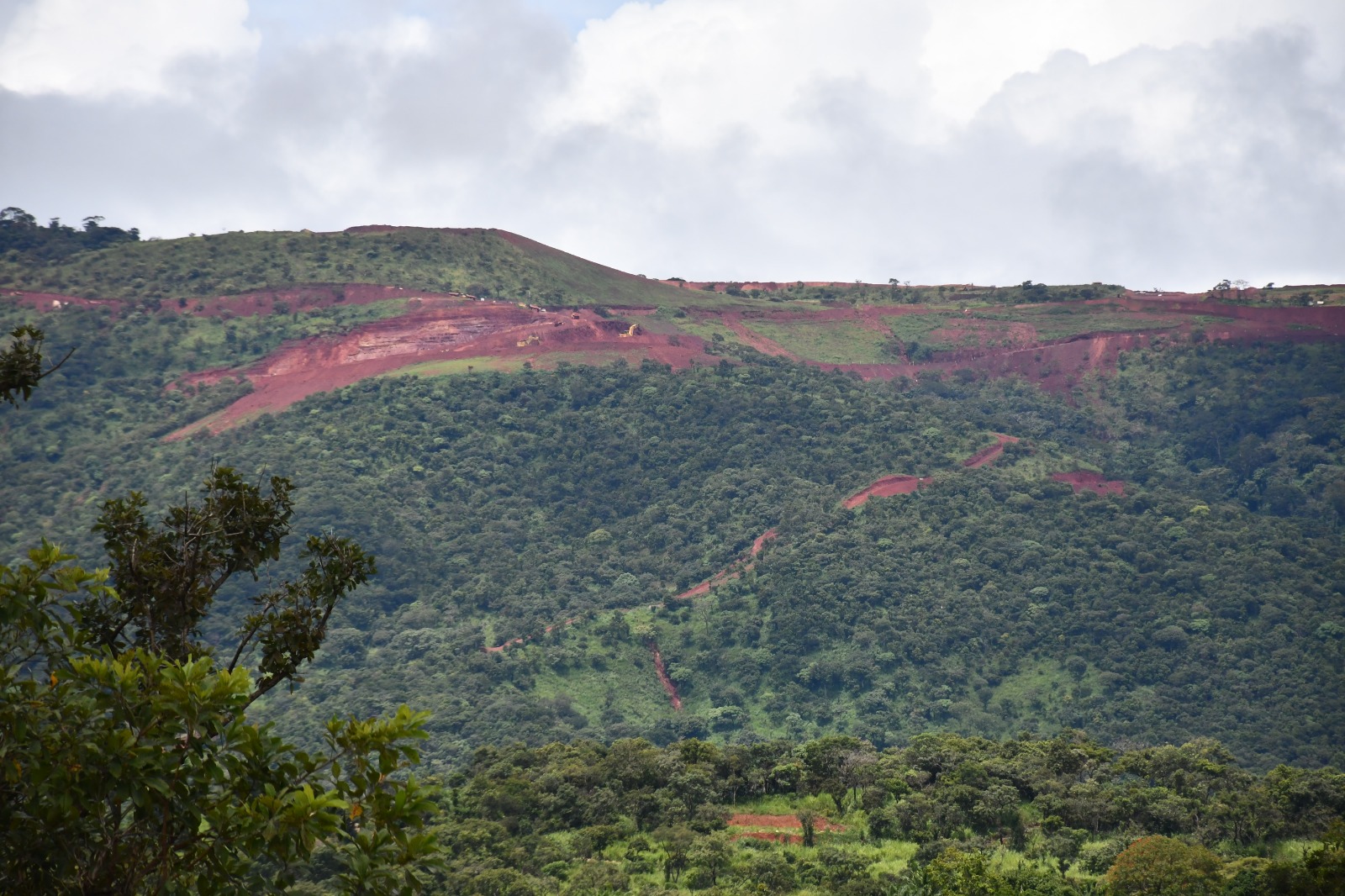
A National Project, Local Damages
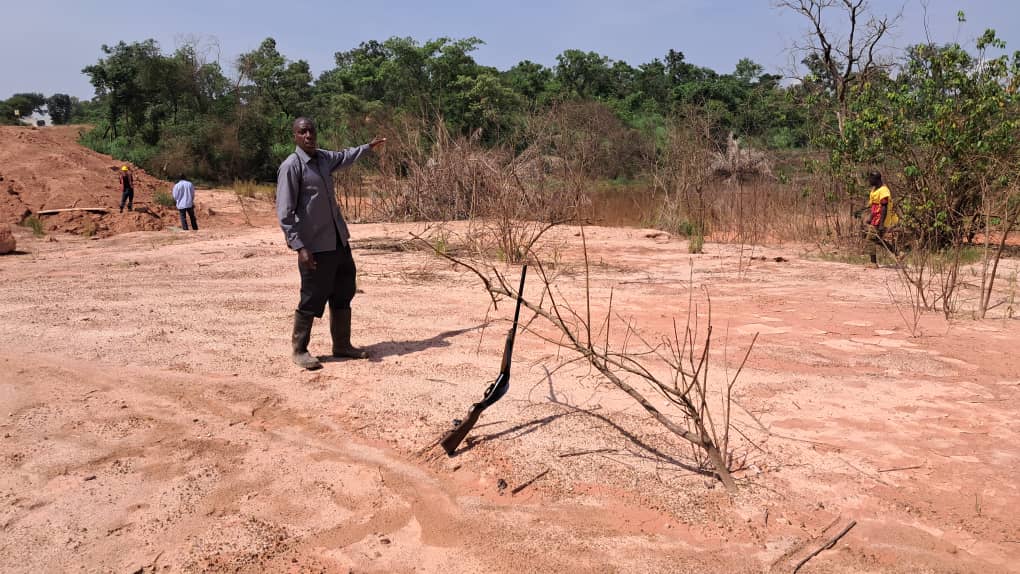
For the families of Wataférédou, Kindia, Mamou, Forécariah, and many other communities along the project’s footprint, the promises of development are in sharp contrast with a daily life marked by uncertainty, loss of livelihood, and worsening socio-environmental conditions. As one resident of Wataférédou — a village in the mining town of Beyla — put it: “Our crops have disappeared, our houses are cracked, and the companies don’t even respond to our letters.”
These are not isolated grievances. The 2023 report by Advocates for Community Alternatives documented how families across several communities had lost farmland or grazing land without fair compensation or under unclear conditions, and how project-related disruptions had reduced crop productivity, threatening food security and household incomes. Three years later, the Action Mines Guinée report confirms that little has changed.
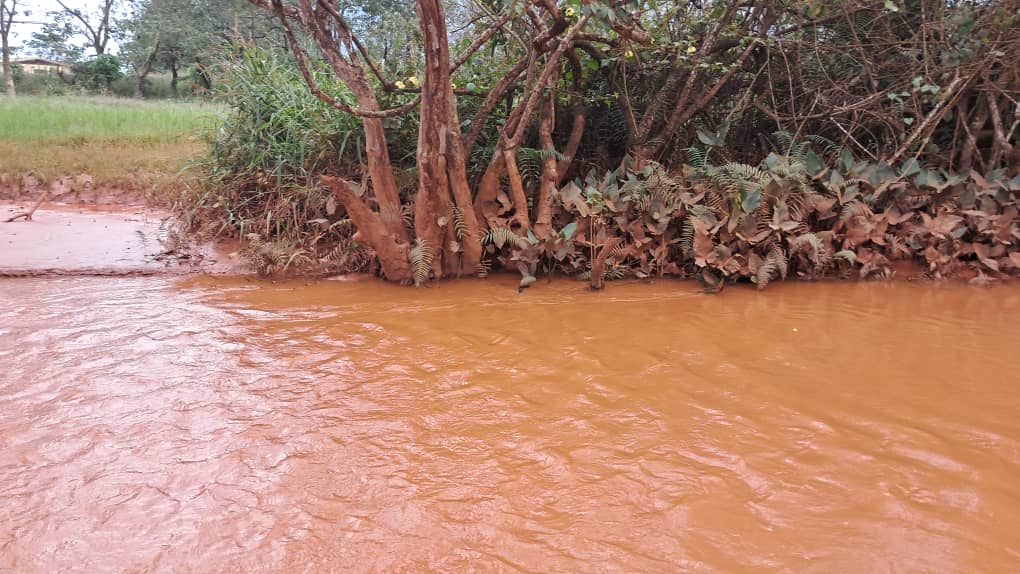
In Kindia, one of the towns crossed by the railway, a community committee member summarized the situation plainly: “We were promised development. What we got is dust, noise, and polluted rivers.” Environmental impacts are increasingly visible: construction activities are degrading water sources and soils, increasing health risks; biodiversity loss, deforestation, and habitat fragmentation are ongoing concerns. Explosions for mining and railway construction are cracking homes and generating stress and insecurity. In some villages, residents have had to leave their homes for safety reasons, sometimes without any immediate housing alternative.
In Mamou, communities feel abandoned. The oldest resident described the experience: “They came, they blew things up, they left. And we are still waiting for someone to take responsibility.”
In Forécariah, along the project’s logistics corridor, fishing — a vital livelihood activity for the local population — has been severely disrupted. Mud has flooded the artisanal port in the town of Bakia, paralyzing activity. Homes remain cracked and unrepaired. For communities whose livelihoods depend on fishing and agriculture, the situation is increasingly untenable.
Now that the project has entered its production phase, these issues are more pressing than ever. The window for course correction is narrowing.
A Promised Development That May Not Reach Most Guineans
The Simandou project is frequently described as a once-in-a-generation economic opportunity for Guinea. That characterization warrants scrutiny. While the project may indeed generate significant revenues and headline GDP growth, there is a substantial and well-documented risk that its economic benefits will flow disproportionately to a small number of elites and connected interests — while bypassing the general population, and particularly the communities most directly affected.
Guinea’s experience with large-scale extractive projects offers little reason for automatic optimism. Decades of bauxite and gold mining have generated substantial export revenues without translating into broad-based improvements in living standards, infrastructure, public services, or community wellbeing. The structural conditions that allowed those benefits to be captured by a narrow group — weak contract transparency, limited accountability mechanisms, inadequate revenue distribution frameworks — remain in place.
This is not an argument against the project’s potential. It is an argument for demanding that the governance conditions exist to make inclusive benefit-sharing possible, before assuming it will happen.
What Accountability Could Look Like
Civil society and affected communities have already articulated what meaningful accountability would require: fair, rapid, and transparent compensation processes; genuine community participation at all stages of the project; regular publication of environmental audits; functioning grievance mechanisms; and independent monitoring of social and environmental impacts. In September 2024, a formal administrative lawsuit was filed seeking the suspension of Winning Consortium Simandou’s Certificate of Environmental Conformity and a halt to its operations, citing failures to comply with the Environmental and Social Management Plan, lack of community consultation, and breaches of Guinea’s international environmental commitments, including the Paris Agreement and the Convention on Biological Diversity. The case remains pending.
“Local communities in Guinea have decades of experience with the negative impacts of bauxite and gold mining. Their requests for prior consultation, fair and equitable compensation, access to information, independent monitoring and reparations for damages remain largely unmet, except in isolated cases following intense advocacy.” — Lien De Brouckere, consultant for The 11th Hour Project
The involvement of international financial institutions in the Simandou 2040 program — including the International Monetary Fund, the International Finance Corporation and the World Bank — could provide meaningful leverage. Their support for Guinea’s economic program should be explicitly conditioned on concrete governance reforms: adoption of the Référentiel National — Guinea’s normative framework governing compensation and resettlement — and full implementation of the Natural Resource Governance Institute’s recommendations, which emphasize contract and financial flow transparency, better regulation of mining revenue use, and stronger accountability mechanisms. These are the types of reforms that can contribute to create the structural conditions for benefits to reach beyond the few.
Development Cannot Leave People Behind
The Simandou iron ore project may yet prove to be a significant chapter in Guinea’s economic history. But its legitimacy — and its legacy — will be determined not by the volumes of ore exported or the revenues reported, but by whether the communities who bear its costs also share in its benefits.
For the families of Wataférédou, Kindia, Mamou, Forécariah, and the many other communities along the project’s corridor, development has meaning only if it reaches them. Their grievances have been documented, raised with the companies, and recorded by civil society. They have not been adequately addressed. That needs to change.