This post is also available in:
 Français (French)
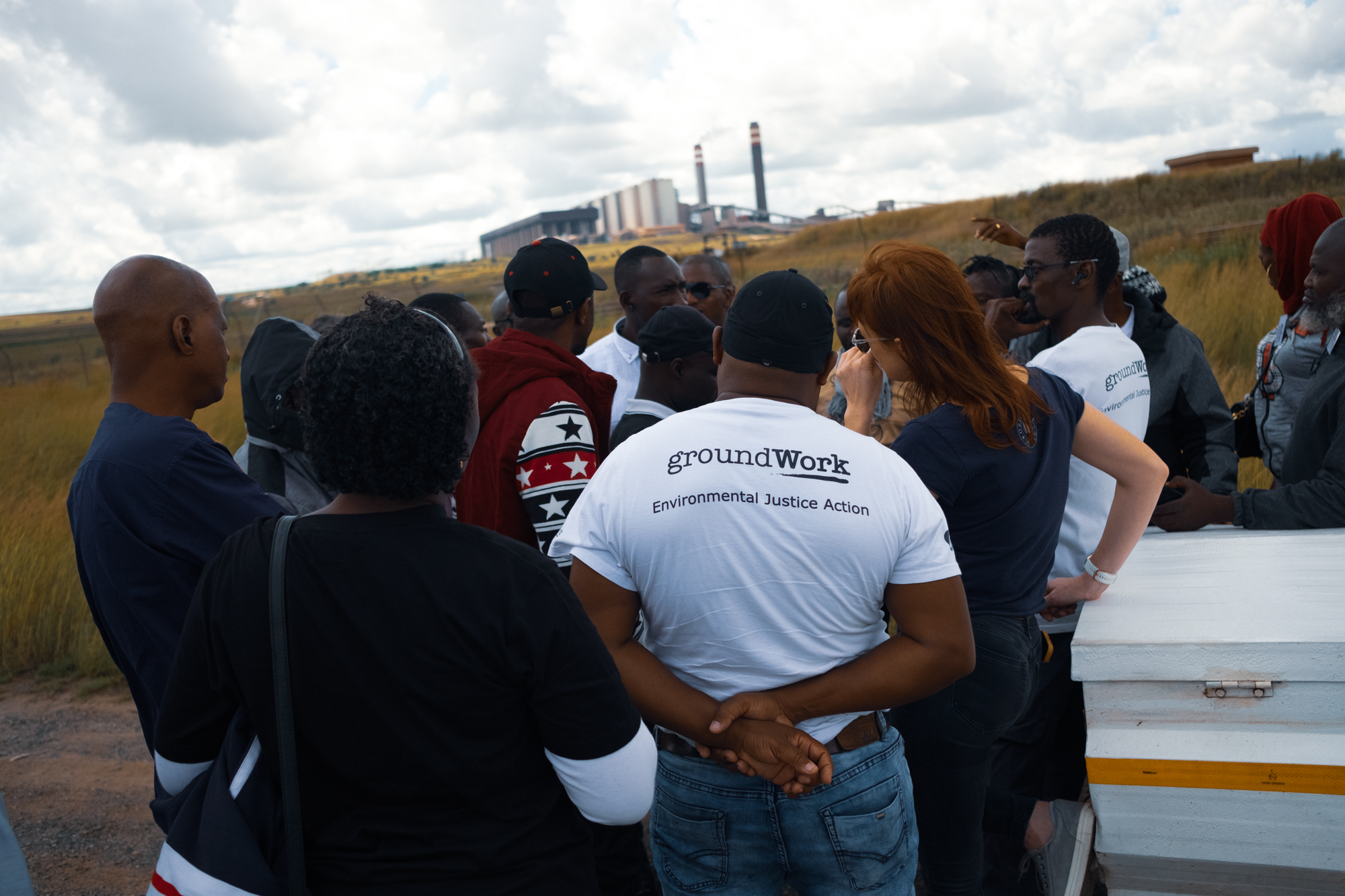
In South Africa, coal dominates the energy landscape—feeding the country’s mineral-energy industrial complex and generating nearly 90% of national electricity. Nowhere is this more visible than in Mpumalanga, a province densely packed with mines and polluting power stations. For decades, communities living on the fenceline have endured social and environmental damages caused by constant blasting. In 2023, representatives of Guinean civil society and local communities travelled to South Africa to understand the human and environmental costs of coal in Mpumalanga. Their aim was to learn directly from communities living beside mines and power stations, and from activists leading the fight for clean air and a just energy transition. With Guinea considering several coal plants to supply future alumina refineries, this experience came at a critical crossroads for the country’s energy future.
Trucks loaded with coal lined the roads, gray smoke drifted from towering stacks. Families living near power plants spoke of cracked houses, contaminated water, and persistent coughs in children. Mpumalanga is a province carrying more than half of South Africa’s 15 coal-fired power stations. These facilities supply nearly 90% of the country’s electricity, but at devastating cost.
The Kendal Power Station located in the province and built by Eskom, is one of the oldest and most problematic plants, polluted ash blanketed nearby homes. The plant’s outdated boilers and broken conveyors meant inefficiency and even higher emissions.
Thomas Mnguni, Coal campaigner at GroundWork in South Africa, clearly states the consequences of this pollution on present and future generations: “the whole coal value chain is destructive. It destroys land, water, and the air people breathe. We are raising sick adults already.” Civil society investigations revealed that Kendal and other plants routinely violated air quality laws, sometimes falsifying environmental data—a discovery that helped trigger a rare criminal case against Eskom, the state-owned electricity company.
Watch the video : A Fossil-Free Future! Lessons on burning coal to fuel refineries & advocacy for a just transition
Voices From the Frontline: How South Africans Organize and Fight Back
The delegation met Vusi Mabaso from the Vukani Environmental Movement (VEM). His organization played a key role in the landmark Deadly Air case, filed in 2019. “We went door-to-door,” Vusi recalled, adding “families told us: ‘yes, the air is making us sick.’ Their testimonies became the evidence that helped us win the case.”
Despite the court victory, pollution persists. But communities have gained something crucial: a voice in shaping air quality laws and demanding accountability.
Throughout the visit, a recurring lesson emerged: the fight for clean energy is inseparable from the fight for community participation and dignity, as Thomas said: “authorities cannot make decisions without engaging the communities whose lives will be affected.”
Imagining a Just Energy Future: From Coal Dependency to Solar Leadership
At the VEM community office, the delegation explored a small solar energy system installed on rooftops. This system, with six solar panels connected to batteries and inverters, provides electricity for the community. While modest, it serves as an example of a practical, community-driven approach to energy—showing how people can take control of their own energy needs rather than relying solely on large, centralized coal power plants.
Bobby Peek, GroundWork Director and longtime environmental justice advocate, emphasizes that for South Africa to achieve a “just energy transition”, the energy system must be accessible, decentralized, and socially owned, meaning communities themselves should have a say in how energy is produced and used. He also points out the paradox: despite having 15 large coal-fired power plants, many people living near these plants still lack electricity. This illustrates energy poverty, meaning that massive energy infrastructure does not automatically translate into access for local communities. This highlights the need for sustainable community-centered renewable solutions.
This pushed the Guinean delegates to reflect: who will benefit if Guinea invests in coal? Who will bear the costs?
Lessons for Guinea: Why This Exchange Matters Now
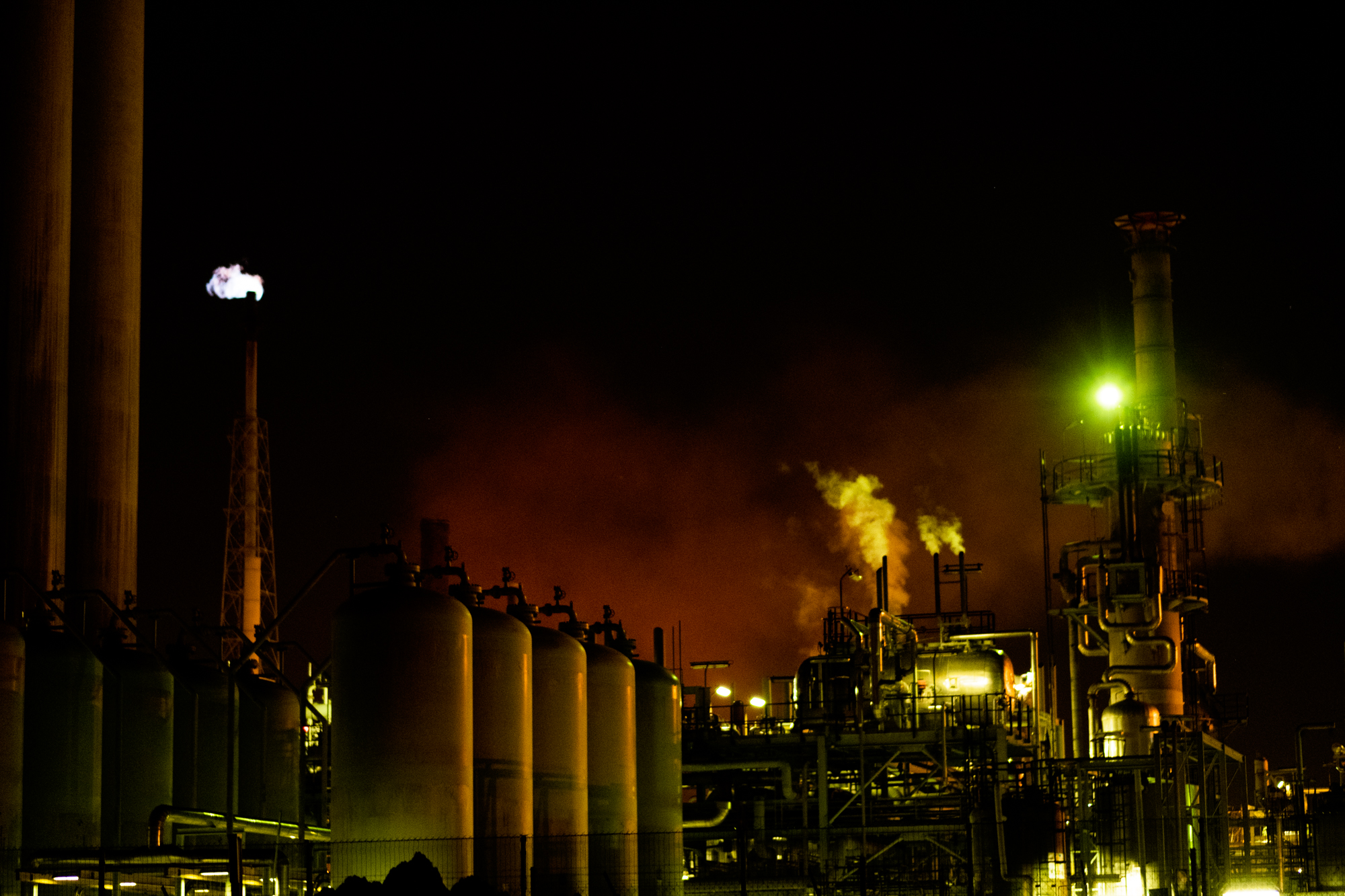
Guinea does not yet burn coal for electricity—but five to seven coal-fired power plants have been proposed to power alumina refineries in Boké and Boffa.
The trip made the risks crystal clear. First, coal devastates water, land and air: communities feedback in Mpumalanga showed how emissions, ash, acid drainage, and blasting create long-term health and environmental crises. Second, transparency and monitoring cannot be taken for granted. Even with strong laws, South African activists had to expose manipulation and fight in court to enforce basic protections.
Another important lesson is that communities must be central to energy decisions, because excluding affected residents leads to deep injustice—both in South Africa and in Guinea, and all over the world. Last, renewable energy alternatives are possible. In SA case, decentralized solar systems demonstrate that energy transitions can be community-driven.
Guinea stands at a crossroads. By learning from the struggles and victories of SA communities, activists and local communities can help shape a future powered by clean and community-centered energy solutions. The time to act is now, to avoid a path to pollution, illness, and dependency.
The South African learning exchange was coordinated by Lien De Brouckere from the 11th Hour Project, who helped shape the learning objectives, prepare participants, and consolidate the key takeaways. Lien later produced a film of the learning exchange, supported by Director of Photography Tom Laffay and editor Kate Linhardt, refining the story arc, script, and key messages. Dubbed in French and the three primary local languages in Guinea (Malinke, Pular and Sousou), the primary purpose of the film is to share the learnings with local communities and civil society organizations in Guinea.
